Stamped concrete services in Buckeye AZ - the look of stone or brick on a solid base
Tired of a plain gray slab? We pour stamped concrete patterned like stone, brick or tile, with the color and sealer you pick.
- Licensed and insured.
- Free on-site estimates.
- Replies within 1 business day.
What goes into a stamped concrete patio or driveway in Buckeye?
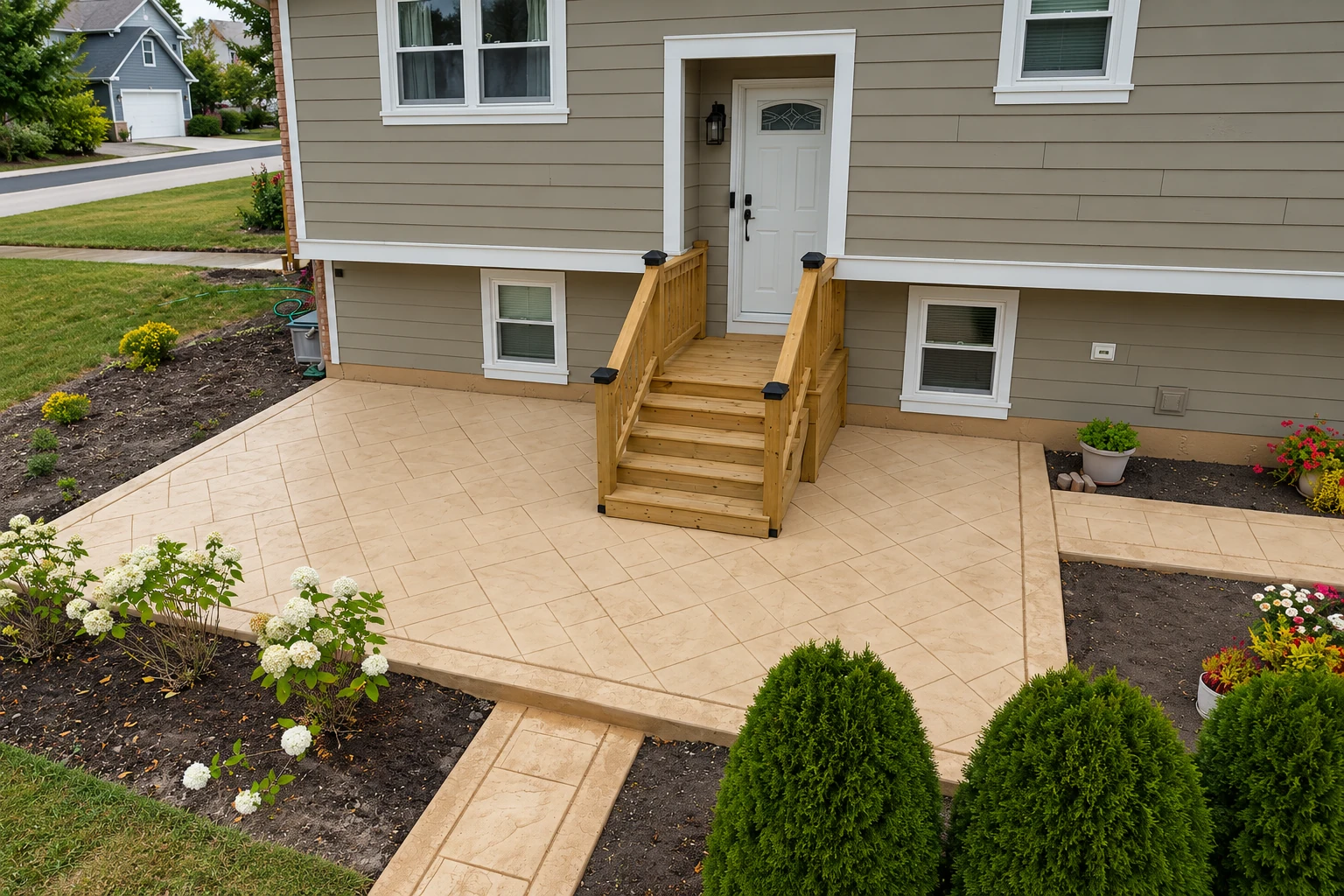
The short answer: Stamped concrete services in Buckeye cover patios, driveways and walks that we color, press with rubber mats while the concrete is still soft and then seal. You get a slab that looks like stone, brick, wood or tile without laying a single paver.
Most people who call us have a plain gray slab that's cracked or sunk, or a dirt yard and a picture of what they want out back. The price moves with the size of the slab, how much old concrete or dirt has to come out first, the pattern, how many colors go on and which sealer you pick. The schedule turns on whether the job needs a permit, the heat on pour day and curing, the wait while the concrete hardens before you use it, and a driveway waits longer than a patio before a car goes on it. My written estimate lays out the size, the prep and the price for your job, so you're not guessing.
How do you know your old slab is ready for stamped concrete?
Cracks and sunken corners
If the old patio or driveway has cracks that keep widening or a corner that's dropped, the dirt underneath usually settled because it was raked flat instead of dug out and packed. A new pattern on top won't fix that, and every storm that sends water under the slab makes the gap worse.
Water pooling by the house
Puddles that sit against the wall after a rain mean the slab tilts toward your house instead of away from it. Leave it and water soaks in at the foundation every time it storms, and the real fix is a new slab poured with the right fall.
Dull, chipping stamped surface
Old stamped work that's gone chalky, patchy or flaky was often poured in the midday heat, which leaves a weak, dusty top. Once pieces start coming loose, dirt and sun get into the color faster, and patches rarely match.
How we pour stamped concrete
Before we dig, I sit down with you on the color method and the sealer, because those two decide how the slab looks years from now. Then our crew digs out to firm ground and packs the subgrade, the dirt and gravel the slab sits on, and sets the forms so the finished slab falls away from your house. We set rebar, the steel that holds the slab together if it does crack, where the slab needs it. In summer we pour early in the day, because heat, dry air and wind change how concrete mixes, travels and sets, and a slab poured at midday ends up with a weak top. The color goes in, we press the rubber mats while the surface is still soft, and we cut control joints, shallow cuts that give the concrete a straight place to crack instead of wherever it wants. When it's sealed and done, I'll show you how to tell when it's time to reseal. If the budget gets tight, most people want to save on the base because nobody sees it on day one. I'd rather shrink the stamped area than skimp on the dig, because a fancy surface on loose dirt cracks just the same.
Stamped work usually sits next to other concrete. If the walk to your front door is cracked too, our concrete sidewalk building work lets us pour it to match the new patio. A stamp isn't the right finish inside, so garage floor concrete is its own job, with a hard, even surface built for tires and tools.
Full stamped slab
This suits a patio or backyard space where you want the whole surface to read as stone or brick. It's the most work per square foot, since every inch gets colored, stamped and sealed.
Stamped border, broom-finished center
This suits a driveway or a tighter budget, because the center gets a broom finish, light grooves that give tires and shoes grip, and costs less to do. You still get the pattern framing the edges where people notice it.
What happens when you call about stamped concrete in Buckeye?
From the first call to the final walk-through, you deal with me. Here's how a stamped concrete job runs, and what you'll have in hand before anything gets poured.
- Step 01
Call or send the form
Call (602) 847-8401 or use the form and tell us what you're picturing. We set a time for me to come see the site.
- Step 02
I come out and measure
I look at the ground, ask what you need the concrete to do and talk through patterns, color and sealer with you. You get a written estimate with the size, the base prep and the price, so you can see where the money goes before you decide.
- Step 03
We pour, then walk it together
Once you say go, we handle any permits, prep the ground, pour and stamp. When it's finished, I walk the slab with you.
Stamped concrete rules in Buckeye, from the slab to the street
The Buckeye Permit Center issues permits for work inside city limits, and patios are on its list of work that needs one, so plan on a permit for a stamped patio. For a stamped driveway or walk, that list doesn't settle it, so it's worth asking the city before we start. If your lot sits in a floodplain, the Flood Control District of Maricopa County has to issue a floodplain use permit before any grading or fill, even when the city needs no permit at all. Out at the street, any work in the city's right-of-way, the public strip that holds the street, sidewalk and alley, needs an approved traffic control plan. If your job needs a permit, we handle the paperwork and line up the inspections.
Across Arizona, some ground holds expansive clay that swells when it's wet, like after a monsoon storm, and shrinks in the hot, dry summer, and that movement can do real damage to houses and sidewalks. That's why we look at the dirt when we dig and pack the base before we stamp anything, the same way we work on jobs in Goodyear and Avondale. We're based in Buckeye and work in the cities around it across the West Valley, so if you don't see yours on our site, call and ask.
Get a written estimate for your stamped concrete
We get back to you within one business day to set a time. I come out, look at the site and give you a written estimate, free and with no obligation.
Why Buckeye homeowners call Monolith Buckeye Concrete Construction
I come out and run the crew
The person who measures your yard and talks through color and sealer with you is the same one running the crew on pour day. Nothing you agreed on gets lost between a salesman and a crew.
In business since 2021
I worked summers on concrete crews all through school and started this business in Buckeye in 2021, and stamped work is one of the things we're best known for. I learned the trade from the ground up, which is why the prep gets my closest look.
A licensed and insured crew
Arizona law lets you skip a contractor's license on your own property only if you do the work yourself or hire licensed contractors, and only for your own use, not a place built to sell or rent. We're licensed and insured, so hiring us keeps you inside that rule.
On stamped concrete, the base and the color choices are the two things you can't redo once it's poured, so let's settle both at your place first. Reach me through our contact page and I'll come take a look.
Stamped concrete questions from Buckeye homeowners
How much does stamped concrete cost in the Phoenix area?
Stamped concrete in the Phoenix area usually costs about $5 to $30 per square foot, and that's the going range for the work, not our quote. Where your job lands depends on the size, the pattern, how many colors go on and how much prep the ground needs. Your written estimate gives you the number for your slab.
Which color method holds up best on a stamped concrete driveway?
Color hardener is the common pick for driveways, because it builds a harder top layer. Installation guidance points out the trade-off: a deep gouge shows gray concrete underneath, while integral color runs all the way through so chips match, though its tones are softer.
What is the best sealer for stamped concrete?
Topical film-forming sealers, which leave a coating on the surface, are the most common choice for stamped concrete. They lead because they bring out the color, so they suit you if you want rich, deep tones.
How often does stamped concrete need to be resealed?
Trade guidance says to reseal stamped concrete when it needs it, not on a set number of years. The signs are water and stains soaking in instead of beading on top, or color that's lost its depth.
Who do I ask about a concrete permit in Buckeye?
Ask the city's Permit Center, which answers whether a project needs a permit at permitcenter@buckeyeaz.gov or 623-349-6200. If you're redoing the stretch where your driveway meets the street, ask them for their residential driveway approach checklist too.
What causes a new concrete slab to crack like the old one?
Most cracks start under the slab, with a base that settles, ground that moves, or water running underneath because the slab tilts the wrong way. Joints cut late or skipped let it crack wherever it wants, which is why the dig and the joints get our closest attention.
Other concrete work that pairs with stamping
Concrete sidewalk building
A cracked or heaved front walk can trip guests and look worse next to a new stamped patio, so replacing it lets everything match from the street in.
Garage floor concrete
If your garage slab is cracked, stained or uneven where the car parks, a new floor gives you a flat, hard surface for vehicles, tools and storage.
Book a look at your stamped concrete project
Call (602) 847-8401 or send the form with the project type, rough square footage and your address, so I can come out already thinking about your layout.