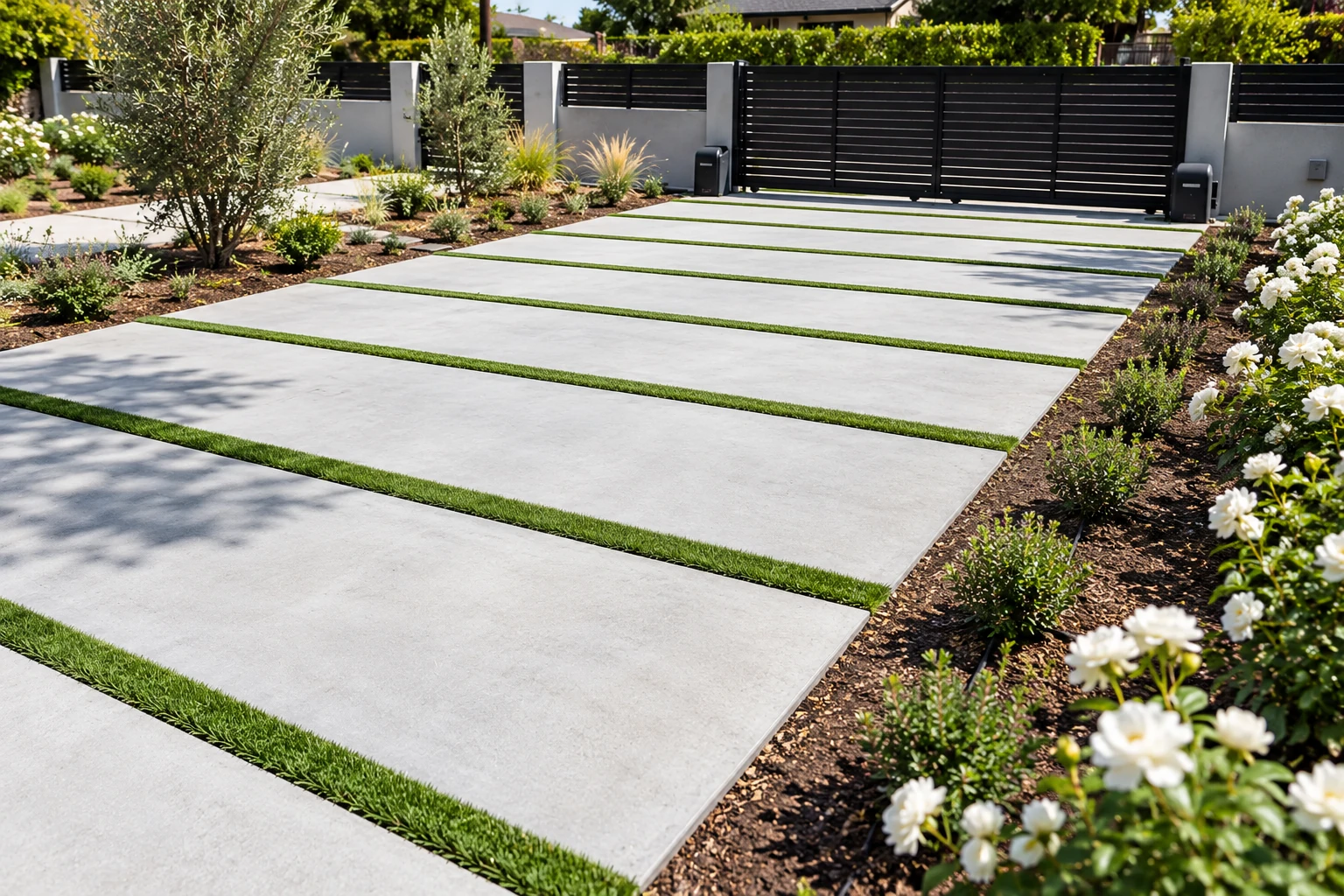
Concrete sidewalk building in Buckeye AZ - a level walk that isn't slick when wet
Cracked, tilted or puddled walk to your door? We pack a solid base and pour a broom-finished walk that sheds water away from your house.
- Licensed and insured.
- Free on-site estimates.
- Replies within 1 business day.
What does it take to build a concrete sidewalk in Buckeye?
The short answer: Concrete sidewalk building in Buckeye means we dig out the topsoil and roots, pack the ground the walk will sit on, then pour, finish and cure a new walk, so you get a path that's evenly supported underneath and has grip when it's wet.
Most calls about a walk start with an old one that's cracked, lifted or holding water, or a newer house with bare dirt where the path to the front door should be. The price moves with how long and wide the walk is, how much old concrete has to come out, how much digging the base needs and whether the walk crosses the driveway, where it has to be built heavier. The schedule turns on getting the utilities marked and on the weather for the pour, and the written estimate I give you after seeing the site puts your own number on it. If your job needs a permit, we handle the paperwork and line up the inspections.
How do you know your walk needs replacing?
Edges that catch your toe
When one slab sits higher than the next, roots or moving ground have usually pushed it up, or the walk was poured on a base that was never packed. The lip only gets taller with time, and it's the kind of thing someone trips on while carrying groceries.
Puddles after the sprinklers
Water that sits on the walk or runs toward the house means it was set in a low spot or sloped the wrong way. Every soaking softens the dirt under it, so the walk keeps settling and the water keeps working toward your foundation.
Slick spots when it's wet
A walk that feels like ice after the sprinklers run usually has a smooth troweled top with no texture to it. It won't get better with age, and a fall on wet concrete costs a lot more than a new walk.
How we build a concrete sidewalk
We start by walking the route with you, because where a walk runs matters as much as how it's poured. We keep it out of low spots that hold water or send it toward the house, and we plan the stretch where it meets the driveway, which often needs a thicker section or rebar, steel bars that hold the slab together, since tires roll over it. Then we dig out the topsoil and roots and pack the subgrade, the dirt the walk sits on, so the support is even from end to end, including where it crosses buried lines. We set the forms so the walk falls away from the house, pour it and give it a broom finish, a light dragged texture that keeps it from getting slick when it's wet. Last, we let it cure, the slow hardening that takes moisture and time, before anyone puts weight on it. If the budget's tight, the base is the last place I'd cut, because nobody sees it on day one, but a nice finish on soft dirt settles with the dirt.
A new walk usually leads somewhere that could use work too. If it runs to a garage with a cracked or uneven slab, we can price garage floor concrete at the same visit, and if you'd rather have color or a pattern than plain gray, our decorative concrete work can carry over to the walk.
Plain broom-finish walk
This suits most front entries and side-yard paths to the gate. It's the simplest walk to build and the broom texture gives you grip in the wet.
Walk that crosses the driveway
This suits a house where the path to the door cuts across the drive. We build that stretch heavier so the car doesn't crack the part you walk on.
Colored or patterned walk
This suits owners who want the walk to match a patio or the front of the house. You can still ask for a texture with grip, because a walk has to be safe to use first.
What happens when you call about a sidewalk in Buckeye?
Here's how a sidewalk job runs with us, from your first call to the day we look over the finished concrete together, so you know what each step asks of you.
- Step 01
Call or send the form
Call (602) 847-8401 or send the form with the walk's rough size and where it runs. We get back to you to set a time for me to come out.
- Step 02
I look at the site
I walk the route with you and ask what you need the walk to do. You get a written estimate, so you know the price before any work starts.
- Step 03
We prep and pour
Once you say go, we take care of any permits, get the ground ready and pour. We set the pour time with you ahead of the day, since the weather has a say in it.
- Step 04
Walk the finished job
When it's done, I walk the new sidewalk with you. We go over when it's ready for foot traffic and what to keep off it while it cures.
Building a concrete sidewalk in Buckeye's ground and permit rules
Buckeye requires a permit to build or alter any structure inside city limits, but its permit list names fencing, pools, spas, patios, solar and re-roofs, and doesn't name sidewalks. That leaves it unsettled for a walk, so the place to ask is the city's permit center. I check before we dig and plan the job around the answer, so you're not finding out halfway through.
The ground is the other local factor. Some soil around here is expansive clay that swells when a monsoon storm soaks it and shrinks in the dry summer heat, and that movement can do real damage to sidewalks. That's why we put the work into the route and the base instead of just pouring thicker, and we see the same kind of ground on jobs in Goodyear and Avondale. We're based in Buckeye and work across the West Valley, so if your city isn't on our site, call and ask.
Get a written estimate for your new sidewalk
We get back to you within one business day to set a time, then I come out, look at the site and give you a written estimate. It's free, done on site and comes with no obligation.
Why Buckeye homeowners call Monolith Buckeye Concrete Construction
I come out and run the crew
I look at your walk myself, and I run the crew that builds it. The person who heard what you need is the one on site for the pour.
Building in Buckeye since 2021
I worked summers on concrete crews all through school and started this business here in 2021. Five years in, the prep work still gets the most of my attention.
Licensed and insured for your job
We're licensed and insured. If something goes wrong on your property, you're not the one left covering it.
Floodplain lots checked up front
If your lot sits in a floodplain, the Flood Control District of Maricopa County requires a Floodplain Use Permit before you build, grade or fill, even when the city needs no permit. I ask about it at the estimate, and if you need one, we handle that paperwork with the county.
On a sidewalk, the route and what's under it decide how it holds up. When you're ready, send us your project or call (602) 847-8401.
Sidewalk questions we hear from Buckeye homeowners
How much does a concrete sidewalk cost in the Phoenix area?
A concrete sidewalk in the Phoenix area usually costs about $4 to $8 per square foot installed. Where yours lands depends on tearing out old concrete, how much base work the ground needs and any heavier section at the driveway. The written estimate I give you after seeing the site is your number.
What happens before digging starts on a new sidewalk in Arizona?
The underground utilities get marked first. Arizona's utility marking rules say you or a contractor can start digging only after all of them are marked, or face a fine. So marking goes on the schedule before we clear any ground.
What causes new concrete walks to crack in summer?
Heat pulls water off the surface faster than it can rise up through the fresh concrete, and flat pours like walks can crack from it. Hot-weather concrete guides tell crews to pour at a time of day or night when the weather allows, so plan around a pour time the weather picks.
Will my new sidewalk crack like the old one did?
A well-built walk can still get hairline cracks, but control joints, grooves cut across the slab, give it a planned spot to crack in a straight line where you won't notice. Most of the ugly cracking on old walks comes from a base that was raked flat instead of packed, or joints cut late or skipped, which is why we take the time on both.
Can I build my own concrete walk in Arizona without a contractor's license?
Yes, Arizona's contractor licensing law exempts owners who improve their own property, whether they do the work themselves or hire licensed contractors. That covers work on the home you live in, not a place you're building to sell or rent. Utility marking and any floodplain permit still apply either way.
How do I get an accurate estimate for a new sidewalk?
Have the walk's rough length and width, where you want it to run and whether it crosses the driveway ready when you call. Those three things drive most of the price, and I confirm them on site before you get the written estimate.
Other concrete work near your new walk
Garage floor concrete
A cracked or uneven garage slab is easier to tackle while our crew is set up nearby, and a new floor gives your car a level surface.
Decorative concrete
If plain gray won't match your patio or the front of the house, colored, stained or patterned concrete gives the walk a look that ties the yard together.
Get your new sidewalk on the schedule
Call (602) 847-8401 or send the form, and every walk we pour is backed by our satisfaction guarantee.