
Concrete retaining walls in Buckeye AZ - a yard that stays where you put it
Dirt washing onto the patio or a slope slumping after every rain? We build a poured wall that holds the ground back and lets water out.
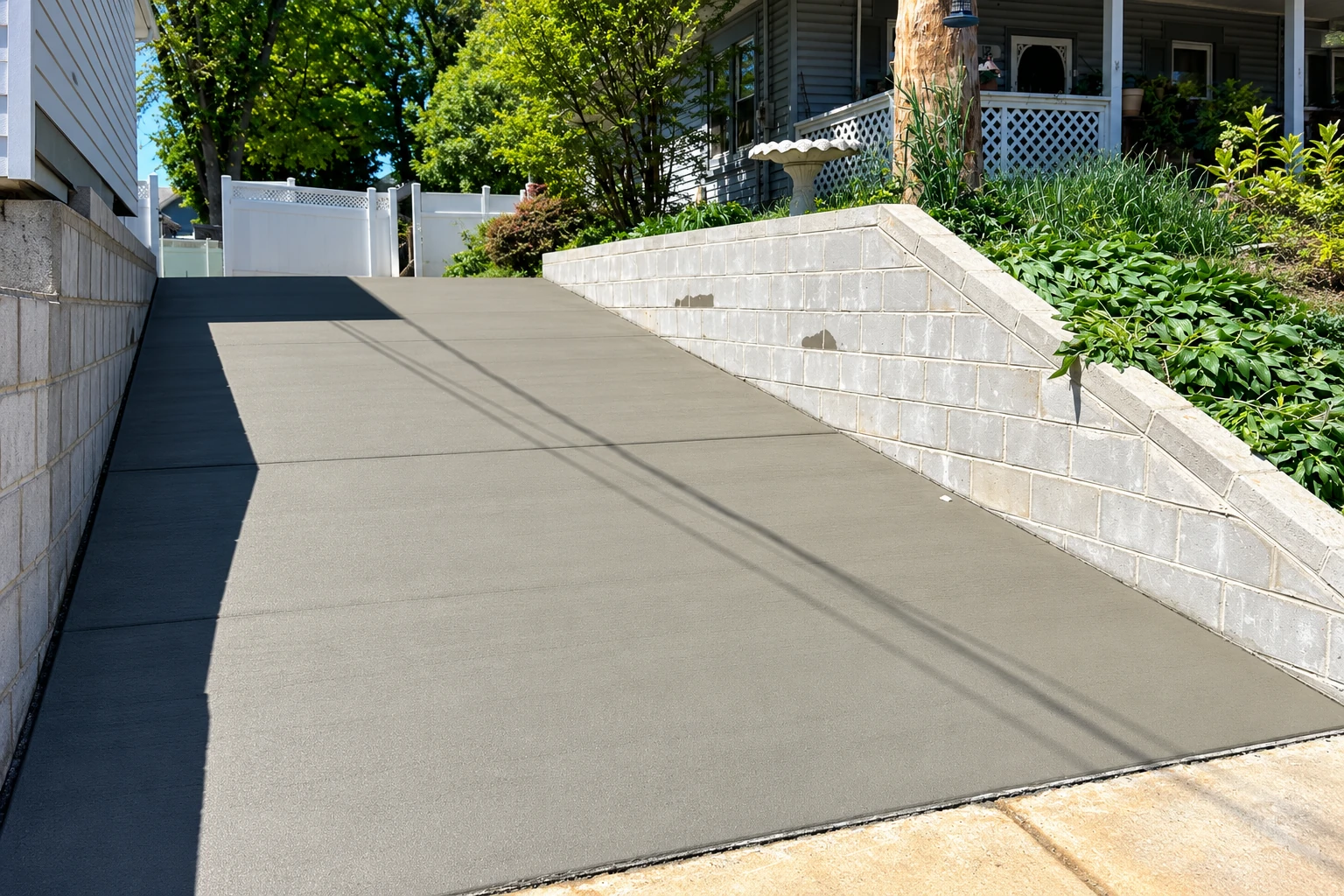
- Licensed and insured.
- Free on-site estimates.
- Replies within 1 business day.
Do you need a poured concrete retaining wall, or will a stacked one do?
The short answer: A concrete retaining wall is a poured-in-place wall that holds back the dirt on a slope or a cut yard, and at Monolith Buckeye Concrete Construction we build them in Buckeye so the water behind the wall drains down and away instead of pushing on it.
Most wall calls start with a slope that keeps sliding onto the patio, a yard that has to be cut down to fit a pool, or a neighbor's yard sitting higher than yours. The first choice is the type of wall, because a dry-laid wall of stacked block or stone costs much less than poured concrete, and that one decision shapes the whole budget. From there the price moves with how long and tall the wall is, how much dirt comes out and how much drainage goes behind it, while the schedule turns on any permit or floodplain review and the time the concrete needs to cure. Your written estimate puts the wall, its drain and its price on paper.
How do you know your yard needs a retaining wall?
Dirt washing onto the patio
After a hard rain you find mud on the patio or the walk, and the slope above looks a little lower each time. That usually means the slope needs a wall or the one it has is too short, and every storm you wait takes more dirt and can start washing out under the slab.
A wall leaning forward
The top of an old wall tips out past the bottom, or a crack near the base keeps getting wider. That's usually soaked dirt pushing from behind, and a wall that's started moving rarely stops on its own, so it costs less to deal with it before it comes down.
Wet stains along the face
Dark streaks run down the wall, or water sits at its foot for days after a storm. Water is getting trapped behind it with no clean way out, and the longer that goes on, the harder the soil pushes.
How we build concrete retaining walls
Most of what I think about on a wall is the water behind it, so our bid shows how your wall drains, and I'll tell you up front if a stacked wall would do the job for less than poured concrete. If poured is the right call, we dig down to firm ground and pack the bottom of the trench, then form the footing and the wall and set rebar, the steel bars inside that keep the concrete from cracking apart as the dirt leans on it. We pour early in the day so the desert heat doesn't dry the top before it sets, then let the wall cure, the wait while concrete gains its strength, before any dirt goes against it. Behind it goes gravel and a drain pipe at the bottom so water runs down and away, plus weep holes, small openings through the wall that let trapped water out. Last, we backfill and shape the ground so rain runs off instead of toward the wall. If the budget gets tight, the drain is the last thing I'd cut, because nobody sees it on day one and it's the part doing the real work.
A wall is often one piece of a bigger yard job. If you're cutting into a slope to make room for a pool, we can pour the concrete pool deck as part of the same plan so the deck and the wall send water the same way. If the wall levels out a spot for a shed, a workshop or a garage, our concrete floor installation work covers the slab that goes inside it.
Poured concrete wall
This suits a slope holding back a lot of dirt, or a wall that sits next to a driveway, a pool or the house. It costs much more than stacked, so it's what we build when the site calls for a true structural wall.
Dry-laid stacked wall
This suits low garden walls and gentle slopes, where block or stone stacked without mortar, with open joints that let water seep through, is enough. When I think that's all your yard needs, I'll say so at the estimate.
What happens when you call about a retaining wall in Buckeye?
From the first call to the final walk-through, here's what happens and who does it, so you know what's coming before anyone shows up with a shovel.
- Step 01
Call or send the form
Call (602) 847-8401 or use the form, and we'll get back to you to set a time to come out. Have the wall's rough length and height in mind, and whether your lot sits in a floodplain.
- Step 02
I look at the slope
I walk the yard, see where the water comes from and where it can go, and ask what you need the wall to do. You get a written estimate showing the wall type, how it drains and the price, so you know the cost before any work starts.
- Step 03
We permit, prep and pour
Once you say go, we take care of any permits and inspections, dig and prep the ground, and pour. The drain goes in before the dirt goes back.
- Step 04
Walk the finished wall together
When the job's done, I walk it with you and show you where the water lets out. Any question you have gets answered right there.
What changes a concrete retaining wall job in Buckeye
The city's Buckeye Permit Center issues permits for buildings and structures inside city limits, and its list names fences, pools and patios but not retaining walls, so ask the permit center whether your wall needs one. If your lot sits in a floodplain, any wall needs a Floodplain Use Permit from the Flood Control District of Maricopa County first, even when the city doesn't require a permit. If your job needs a permit, we handle the paperwork and line up the inspections with the city or county.
Water is the bigger local story. Maricopa County floods more than people expect for a desert, mostly in summer monsoon and winter storms, and the clay soils found across Arizona swell when they soak and shrink back in the dry heat, which loads a wall from behind over and over. That's why we size the gravel and drain to your slope and keep the ground falling away from the top of the wall, and we plan for the same storms and soil on jobs in Goodyear and Surprise. We're based in Buckeye and work in the cities around it across the West Valley, so if your city isn't on our site, call and ask.
Get a written estimate for your retaining wall
Send the form and we'll get back to you within one business day to set a time for me to come out. The estimate is free and done on site, with no pressure and no obligation.
Why Buckeye homeowners call Monolith Buckeye Concrete Construction
I come out and run the crew
The person who looks at your slope and writes the estimate is the same one running the crew on pour day. Nothing you told me gets lost between the estimate and the work.
Licensed and insured for permit jobs
We're licensed and insured. Arizona lets someone without a contractor license take only small jobs under $1,000, labor and materials together, and not any job that needs a local building permit, so ask whoever bids your wall about their license.
In business since 2021
I worked summers on concrete crews all through school and learned the trade from the ground up before starting this company. That's why I spend the most time on the dig, the base and the drain before anything gets poured.
On a wall, the drain behind it matters more than the face you see. Call (602) 847-8401 or send us a note, and I'll come take a look.
Retaining wall questions we hear in Buckeye
How much does a concrete retaining wall cost in the Phoenix area?
Building a retaining wall in the Phoenix area usually costs about $2,400 to $7,300 per project. That's the area's typical range, not our price, and your wall lands higher or lower depending on whether it's poured or stacked, its size and how much drainage goes behind it. Our work is backed by our satisfaction guarantee, and the written estimate gives you your own number.
What causes a retaining wall to fail?
Most retaining walls fail from water and soil moisture building up behind them and pushing the wall out. The usual guidance is that every wall should let that water drain freely down and away. Weep holes help, but research has found they often clog from poor backfill, plant roots or animals, so it's worth keeping them clear.
How do I find out if my Buckeye lot is in a floodplain?
Look up your address on the Flood Control District's GIS Floodplain Viewer Map, which shows whether a lot sits in a floodplain. If it does, the district's permit comes before the wall, so tell us when you call and we'll plan around it.
Do I need a soil test before building a retaining wall?
The surest way to know whether your soil swells is a test from a geotechnical firm, a soil testing company that drills soil borings and measures how much the soil swells. Clay that moves can change how much drainage goes behind the wall. If what I see at the estimate makes a test worth paying for, I'll tell you.
What should I ask a contractor before hiring them for a retaining wall in Buckeye?
Ask how their bid lets water drain down and away from the wall, since that's where most walls go wrong. Ask about their contractor license too, and because most people doing business in Buckeye need a city business license, it's fair to ask about that as well.
How long does it take to build a concrete retaining wall?
It takes longer than the pour itself, because any permit or floodplain review comes first and the wall has to cure before dirt goes back against it. At the estimate I'll walk you through the order of work for your wall, so you know what's happening in your yard and when.
Other concrete work that goes with a wall
Concrete pool decks
If a pool is part of your yard plan, a concrete deck around it gives you room to sit and walk and moves splash water away.
Concrete floor installation
When a wall opens up level ground for a shed, workshop or garage, the building still needs a solid floor poured on a packed base underneath it.
Get your retaining wall estimate started
Call (602) 847-8401 or send the form now, so the dig, the drain and any permit get lined up before your slope gives up more ground.