Concrete Floor Installation in Buckeye AZ - a floor built for the covering you choose
Cracked, uneven slab or bare ground where a floor should go? We pour a floor ready for the tile, wood or carpet you want.
- Licensed and insured.
- Free on-site estimates.
- Replies within 1 business day.
What does it take to put in a concrete floor in Buckeye?
The short answer: Concrete floor installation in Buckeye, AZ means digging out and packing the ground, pouring a new slab, then finishing it and giving it time to harden, so you end up with a solid, level floor ready for tile, wood, carpet or a sealed bare finish.
Most floor calls come from someone adding a room, finishing out a shop or replacing a slab that's cracked and sunk, and if yours is a garage, our garage floor concrete page covers that work. The price moves with the size of the floor, how much digging and base work the ground needs, what has to go under the slab for your covering, how thick it runs and how close we can get the truck. The schedule turns on any permit and inspection, the weather on pour day and the wait before you can walk on it or lay flooring, and the written estimate I give you after seeing the site lays out your own numbers.
How do you know it's time for a new concrete floor?
Cracks that keep opening
A crack that gets wider, or has one side higher than the other, usually means the ground under the slab settled or was never packed. Left alone it keeps moving, and it'll crack any tile or split any flooring you lay over it.
Low spots and rocking tile
If water collects in one spot when you mop or tile rocks underfoot, part of the slab has likely dropped where the base gave way. Patching the top won't hold, because the soft spot underneath is still there.
A dusty, chipping surface
A top that sheds powder or flakes at the edges usually means it was finished too wet or dried out too fast after the pour. It gets worse with every bit of foot traffic, and most coverings won't bond well to a surface that's coming apart.
How we handle concrete floor installation
Before anything else I ask what flooring goes on top, because tile, wood, carpet or bare concrete each change what we put under the slab. Then we dig out to firm ground and pack the subgrade, the dirt the slab sits on, and the base above it, because a floor is only as flat as what's holding it up. We set the forms, place rebar, the steel that ties the slab together, and pour. Finishing, cutting control joints, the grooves that give the slab a planned place to crack, and curing, the stretch where we keep it from drying too fast so it gains strength, all run on timing, so we schedule the crew around the concrete and not the other way around. If a budget gets tight, the base is the last thing I'll cut, because nobody sees it on day one and everybody sees it once it settles.
A new floor often ties into work outside the walls. If the room opens onto the yard, we can build concrete steps down from the door at the same time, and if it sits near the water, matching concrete pool decks keep the transition clean. Doing it together means one crew and one plan for the grades between them.
Smooth finish under a covering
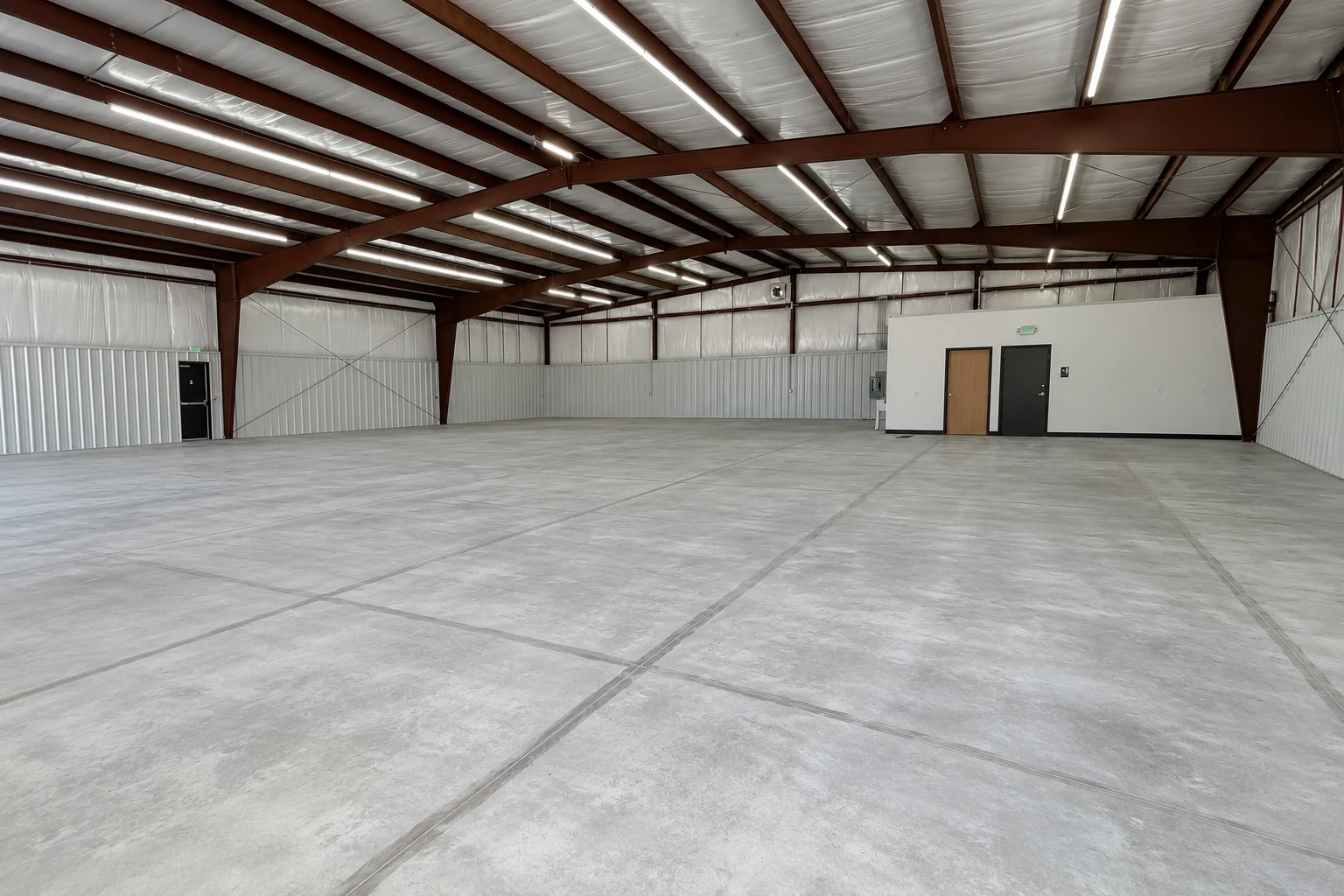
This suits a room getting tile, wood, vinyl or carpet, because the covering needs a flat, tight surface to sit on. We trowel the top smooth and keep it true so your installer isn't grinding down high spots later.
Sealed concrete as the floor
A shop, storage room or modern living space can skip the covering and use the slab itself, sealed or stained. It takes more care at finishing since every trowel mark shows, but there's no flooring to buy afterward.
What happens when you call about a concrete floor in Buckeye?
It's three steps from your call to a finished floor, and I'm there for each of them, from the first look at the site to the walk-through once the crew is done.
- Step 01
Call or send the form
Call (602) 847-8401 or use the form, and we'll get back to you to set a time to see the site. Tell us roughly how big the floor is and what covering you want.
- Step 02
I visit and write it up
I walk the site, ask what you need the floor to do and what goes on top, then give you a written estimate. It spells out the prep, the slab and the price, so you know what you're paying for before anything starts.
- Step 03
We prep, pour and finish
Once you say go, we handle any permits, dig out and pack the base, then pour and cure the slab. When it's done, I walk the finished floor with you.
Concrete floor permits and inspections in Buckeye
Buckeye's Permit Center issues permits to build or alter buildings and structures in the city, and the work it names includes patios and pools but not concrete floors. That list doesn't settle whether your floor needs one, so it's worth asking the city before the pour, and if it does, we handle the paperwork and line up the inspections. The city inspects permitted work at set stages, and anything that fails has to be fixed before the job moves on, so we build that into the schedule. If your lot sits in a floodplain, the Flood Control District of Maricopa County issues a Floodplain Use Permit, and the city says you need it before you build, grade or fill, even when no city permit applies, so tell me early if that's you.
We're based in Buckeye and work in the cities around it across the West Valley, and we pour floors the same way whether the job is here, in Goodyear or in Avondale. Most are room additions, finished-out garages and shop buildings.
Get a written estimate for your new concrete floor
Send the floor size in square feet, the covering you want and whether your lot is in a floodplain, and we'll get back to you within one business day. I'll come out, look at the site and give you a free written estimate, with no pressure and no obligation.
Why Buckeye homeowners call Monolith Buckeye Concrete Construction
Same person prices and pours
I come out to look at the job myself, and I run the crew that does the work. What we talk about at the site is what gets built, with nobody in between to lose the details.
Prep-first crew since 2021
I worked summers on concrete crews through school and started this business in Buckeye in 2021, so I learned the dig and the compaction before I ever finished a slab. That's why I don't rush the ground work, even when the pour date is close.
Ask about licensing before hiring
We're licensed and insured. For a floor in a shop or other business space, Buckeye's code requires an Arizona state-licensed commercial contractor, with homes excepted, so ask every bidder which license they hold.
If you're planning a new floor, send us your details or call (602) 847-8401, and tell me what's going on top of it.
Concrete floor questions from Buckeye homeowners
Will a new concrete floor crack?
Some cracking should be expected on any slab, even with joints cut close together. Steel in the slab won't stop it, but when it's sized and placed right it keeps cracks tight, and joints cut on time give most cracks a straight line to follow. We plan both before the pour.
Do I need a moisture barrier under tile or wood flooring on concrete?
Yes, industry guidance calls for protection against moisture moving up through the slab when it'll be covered with carpet, tile or wood, because that vapor can make adhesives let go and leave flooring warped or stained. Experience shows a vapor retarder, the plastic sheet under the slab, protects coverings best when it sits right against the concrete, so ask where it'll go. The slab also has to cure and dry before it's tested for moisture, and water that gets on it during construction takes a long time to leave.
Can you pour a concrete floor in Buckeye in the summer?
Yes, but heat changes how it's done, because concrete sets faster when it's hot, which makes finishing harder and raises the chance of shrinkage and heat cracks. Those problems can show up any time of year but mostly come in summer, and wind and low humidity make them worse. We plan the pour time and the crew around that, so ask any contractor how they handle a hot or windy pour day.
How much does a concrete floor cost in the Phoenix area?
A new concrete slab in the Phoenix area usually runs about $4.50 to $8 per square foot, and that's a general slab price, not a quote for an indoor floor. Yours lands higher or lower depending on the base work, the thickness, what goes under it for your covering and the finish. The written estimate I give after seeing the site is your real number.
How long does it take to install a concrete floor?
It takes longer than the pour itself, because the dig and base work come first and the slab needs time to cure before you use it and to dry before flooring goes down. Any permit and inspections add their own wait, and I'll walk you through the order for your job when I look at the site.
What causes high and low spots in a new concrete floor?
Poor timing during finishing, jointing and curing is a common cause, and it can also lead to cracks and a surface that wears fast. The base matters too, since a slab settles wherever the ground under it wasn't packed evenly. Ask any crew how they schedule each step, because the floor's quality rests on it.
Concrete work that pairs with a new floor
Concrete pool decks
A room that opens toward the pool usually needs a deck that meets it cleanly, with a textured surface that gives bare feet some grip near the water.
Concrete steps construction
When a new floor sits higher than the yard or garage, solid concrete steps give you a steady, even way in and out without a wobbly wood stoop.
Book an on-site look at your floor
Call (602) 847-8401 or send the form, since we schedule the crew around finishing and curing and getting on the calendar early gives you more say in your pour date.