
Garage Floor Concrete in Buckeye AZ - a floor on firm ground that holds your car
Cracked, pitted or sinking garage floor? We repair what's still sound and replace what isn't, on ground packed firm before we pour.
- Licensed and insured.
- Free on-site estimates.
- Replies within 1 business day.
Should you repair your garage floor or pour a new one?
The short answer: Garage floor concrete work in Buckeye covers two jobs. We either repair a slab that's still sound, or we tear out a failed one and pour a new floor on ground that's been dug out and compacted first, so it stays flat under your car. A repair keeps the garage in use with little downtime, while a replacement means going without it until the new slab has cured.
Most people call once a crack has opened up or water has started sitting where it shouldn't, and they want to know what it'll cost and how long the car stays in the driveway. The price turns on the size of the floor, whether the old slab can be saved or has to be broken out and hauled off, how much soft ground we have to dig out, and how thick and reinforced the new floor needs to be. The schedule turns on the tear-out, any permit, the weather on pour day and the cure afterward. I'll give you both in a written estimate once I've seen the floor. We're based in Buckeye and work in the cities around it across the West Valley.
How do you know your garage floor needs work?
A crack that keeps growing
A thin crack on its own is often just the slab shrinking as it dried, but one that keeps widening or has one edge sitting higher than the other usually means the ground underneath moved. The longer it goes, the more water and grit get in, and a crack you could have filled turns into a section that has to come out.
A low spot holding water
If water or oil collects in one place, or a corner has dropped near the door, the soil under that part of the slab has usually settled or washed out. Leave it, and the gap under the concrete keeps growing until the slab above it cracks across.
A surface that chips or dusts
A top that flakes, pits or leaves gray powder you sweep up every week usually points to a weak surface from a rushed pour or a poor cure. It wears faster under tires, and it's a lot easier to fix while the slab beneath is still sound.
How we handle garage floor concrete
The first thing I do is figure out whether your slab needs a repair or a full replacement, and I'll tell you straight which one makes sense. On a repair, we clean out and fill the cracks and patch the pitted or low areas so the floor is sound and smooth again. On a replacement or a new garage, we cut and break out the old slab, dig out the soft soil and pack the subgrade, the dirt the slab sits on, until it's firm. Then we set the rebar or wire mesh, the steel inside that holds the concrete together if it cracks, check that the floor falls toward the door and not toward the house, pour, and cut control joints, shallow grooves that give the slab a straight line to crack along instead of wherever it wants. After that the slab cures, sitting undisturbed while it gains strength, and we'll tell you when the floor is ready for the car. If the budget is tight, don't cut the base. Nobody sees it on day one, but it's what keeps a floor flat, and a nice surface on soft ground cracks just the same.
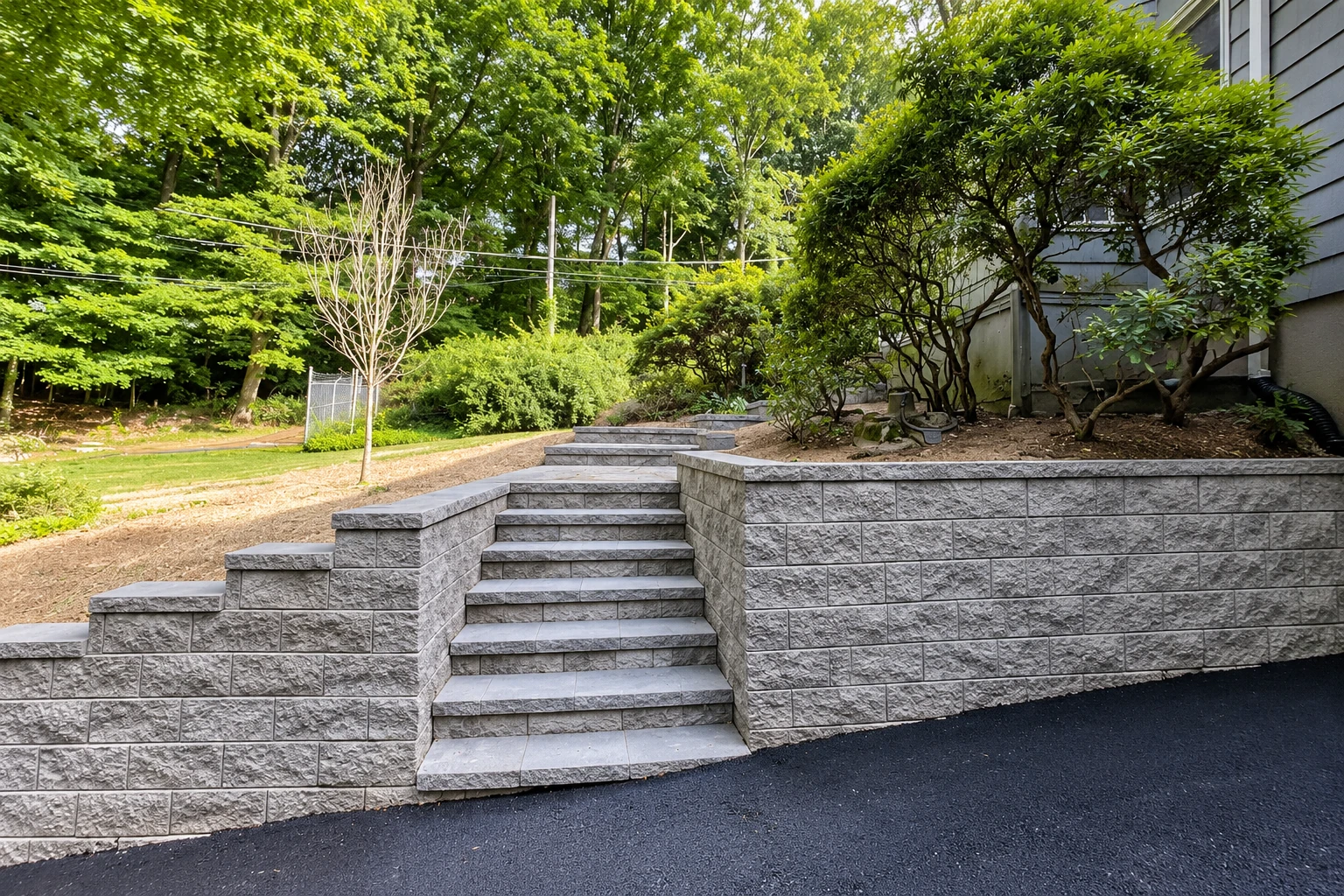
Some garage jobs lead to other work. If you'd rather have color or a pattern than plain gray, we can add decorative concrete to the new floor. On a lot where the ground falls away beside the garage or driveway, concrete retaining walls keep the dirt where it belongs along the edge of the slab.
Repair on a sound slab
This suits a floor with surface cracks, some pitting or one low area, where the slab itself hasn't failed. You keep most of the floor, skip the tear-out and get the garage back much sooner.
New or replacement slab
This suits a floor that's cracked across, sunk in sections or sitting on ground that's moved, and it's the only choice for a new garage. It costs more and keeps you out of the garage longer, but you start over with a base that's packed right.
What happens when you call about your garage floor in Buckeye?
Here's how a garage floor job runs with us, from the first call and the site visit to the pour and the walk-through at the end, so you know what's coming before we start.
- Step 01
Call or send the form
Call (602) 847-8401 or use the contact form, and we'll set a time to come out. The rough square footage, a few photos of the damage and the address help me know what I'm walking into.
- Step 02
I look at the floor
I come out myself, check the cracks and low spots, and ask what you need the floor to carry, whether that's two cars, a workbench or a heavy truck. You get a written estimate that says whether I'd repair or replace and what's driving the price.
- Step 03
We prep and pour
Once you say go, we handle any permits, dig out and compact the base, and pour. On a replacement, plan on the garage being out of use while we work and while the slab cures.
- Step 04
We walk the finished floor
When the work's done, I walk the floor with you and go over anything you want to look at. You'll know when it's ready for foot traffic and when it's ready for the car.
What changes garage floor concrete work in Buckeye
Whether a garage floor needs a permit in Buckeye isn't spelled out. The city's Permit Center handles permits for any building or structure inside city limits, and its list names jobs like patios, pools, fencing and re-roofs but not garage floors, so the Permit Center is the office to ask, and we'll check with them before we start. If your job does need a permit, we handle the paperwork and line up the inspections with the city or county. If your lot sits in a floodplain, the Flood Control District of Maricopa County requires its own Floodplain Use Permit before you build, grade or fill, even when the city doesn't require anything, so we look into that before we dig.
Heat is the bigger worry on garage pours here. Hot weather makes the cement react faster and pulls water out of the mix faster, which can weaken the slab and leave a dusty top, so in summer we pour in the cooler part of the day and start curing right away. We work around the same heat on garage floors in Goodyear and Surprise, from newer homes with attached garages to older floors that have carried cars for years.
Get a written estimate for your garage floor
Once you send the form, we'll get back to you within one business day to set up a visit. I come out, look at the floor and give you a written estimate on site, free and with no obligation.
Why Buckeye homeowners call Monolith Buckeye Concrete Construction
Estimate and crew, same person
I come out to look at your garage myself, and I run the crew that does the work. The answer you get on repair or replace comes from the person who'll be there on pour day.
In business since 2021
I worked summers on concrete crews all through school, then started this business in 2021. I learned the trade from the ground up, which is why the dig and the compaction get the most attention on our jobs.
Covered when the saws come out
We're licensed and insured. That matters on a garage floor, because a tear-out puts saws, a breaker and a crew right up against your house.
Dust kept down during tear-out
Maricopa County requires dust control on any construction or demolition job, no matter how small, so we keep the dust down while we cut and break out an old floor. That keeps it off your cars, your house and your neighbor's yard.
If you're not sure whether your floor needs a patch or a new slab, call (602) 847-8401 or send us the details, and I'll come take a look.
Garage floor concrete questions in Buckeye
How much does a new concrete garage floor cost near Buckeye, AZ?
Across the Phoenix metro area, a plain concrete slab with no staining or stamping usually costs about $6 to $12 per square foot. That's what the work goes for around here, not our price, and garage floors often land higher in that range because they're usually poured thicker and reinforcement adds to the cost per square foot. Your written estimate gives you the figure for your floor.
Should I repair or replace my cracked garage floor in Buckeye?
Repair it if the slab is still sound and the damage is on the surface, like hairline cracks, minor pitting or a low spot in one area, because that's often the cheaper fix. Replace it when the damage runs across the floor or the problem is underneath, since patching a slab that's still moving only buys time. Which one you're looking at decides most of the budget.
How long does a new garage floor take to cure before I can park on it?
Plan on about a week before the car goes back in. One Phoenix cost guide says a new slab is usually walkable within 48 hours and calls waiting a week before heavier loads the safe choice, so clear out what you'll need from the garage before pour day.
Will my new garage floor crack like the old one did?
It can, because any concrete slab can crack, and the steel inside it doesn't change that. Wire mesh or rebar placed in the right spot can keep cracks narrower, though, and when an old floor fails badly, the cause is usually the ground it was poured on.
What is the best way to cure a new concrete garage floor?
Start curing as soon as possible after finishing, either with a sprayed-on curing compound or with burlap kept damp for at least three days, according to national guidance for concrete slabs. Both keep water in the top of the slab while it gains strength. If you're comparing contractors, ask which method they'll use.
Who is allowed to do concrete work in Arizona?
Under Arizona law, someone without a contractor's license can only take minor jobs where the total price, including labor and materials, is under $1,000, and that exemption ends once the work needs a local building permit. Homeowners can also improve their own property themselves or with licensed contractors, as long as it's for their own use and not to sell or rent.
Other concrete work around your garage
Decorative concrete
If a plain gray floor isn't what you want, a colored or patterned finish can turn the garage into a shop or extra room that looks finished.
Concrete retaining walls
When the yard drops off beside the garage or driveway, a concrete wall holds the soil in place so rain can't wash out what the slab rests on.
Get your garage floor looked at
Call (602) 847-8401 any day of the week, early morning or late evening, because a crack you catch now is usually cheaper to deal with than a slab that's kept moving.